Car Locksmith on Amelia Island, FL
Car locksmith service on Amelia Island, done where the vehicle sits, 24 hours a day, from the van based at 382 S Fletcher Ave in Fernandina Beach: lockouts at the beach accesses, the state park and the marina; replacement keys when the keys went into the sand or the sea; spares and fobs; ignitions worn by salt; golf carts, boats and the work trucks at the port. No tow over the bridge and no dealer. Call (904) 621-6480 and a licensed and insured tech is on the way with a fast arrival time.
Every car job is quoted item by item before the van moves: the trip charge, the labor, the parts, meaning the key blank or the fob, and an after-hours charge at night or on a weekend. The invoice matches. Lockouts go first, and a car with a child or a dog inside in the heat goes ahead of everything.
Visitors are half the island's car calls, and the van is set up for them: rental cars opened and keyed on the rental agreement, keys made from the key code with no original, fobs programmed with dealer-grade tools. Residents get the same, plus the golf cart, the boat and the truck. Below is what each car service involves and what to have ready. We are the #1 locksmith on Amelia Island for drivers because the quote holds, the arrival is fast, and the car is opened without a mark.
Questions Amelia Island drivers and visitors ask us
What does a car locksmith cost on Amelia Island?
An itemized quote: the trip charge, the labor to open the car or to cut and program a key, the parts, meaning the blank or the fob, and an after-hours charge if it applies. Make, model, year and whether any key exists, and every item is named before the van leaves 382 S Fletcher Ave. Call (904) 621-6480.
My keys went in the ocean. Do I need a tow off the island?
No. The tech meets you at the beach access, confirms the car is yours with the VIN and your ID, pulls the key code, cuts a key in the van and programs the chip or smart key through the port, and the car starts before the tide turns. Domestic and Asian makes are the daily work; ask about a European car when you call.
It's a rental car. Can you still open it or make a key?
Yes. The rental agreement and your ID take the place of the registration for a lockout, and a call to the rental company authorizes a replacement key cut and programmed at the lot. It beats a tow to an airport counter by a day of your vacation.
How long does a replacement key take at the car?
Well under an hour for a standard transponder key on most models, about the same for a smart key. The slow part is the ownership check, so have the registration or title and your ID ready, or the rental agreement.
Can you open my car without scratching it?
Yes. An air wedge opens a small gap at the top of the door and a long-reach tool works the unlock button or the handle, or the tech decodes the lock and cuts a key that opens the door. Paint, weatherstrip and glass are untouched, and nothing is drilled.
Do you do golf carts and boats?
Yes. Golf cart keys for the Plantation and American Beach are cut from the common blanks the van carries. Boat ignition keys and cabin locks at the marina are copied, replaced and keyed alike. Same van, same itemized quote.
Before you book any locksmith on Amelia Island, here is how an honest quote is put together and what to check when the van pulls up.
What a real quote looks like, item by item
A locksmith price has four parts whether anyone names them or not. The trip charge gets the van to you. The labor is the work at the door or the car: picking, rekeying, cutting, programming. The parts are what you keep, a deadbolt, a core, a key blank, a fob. The after-hours charge covers nights, weekends and holidays, and on a weekday afternoon it is nothing.
Ask for each one by name before the van leaves. At (904) 621-6480 the dispatcher reads them out and the tech repeats them at the door, and the invoice adds up to the same total. A single low number with "it depends" attached is not a quote; it is the opening of a negotiation you did not agree to, and it tends to go one way once a van is parked in your driveway.
What to tell the dispatcher so the price is right the first time
Six facts price a job exactly. What is locked: a car, a house, a condo, a rental, a storefront, a safe, a boat. Where it is, by street or at least by end of the island, since Fort Clinch and the Plantation are different drives. What kind of lock or car it is: a knob, a deadbolt, a keypad, a storefront mortise, or the make, model and year.
Whether you have any working key. What you want when it is done: just in, or in and rekeyed, or a new lock. And when: now, or booked for the morning after checkout. With those six the quote is the invoice. Without them it is a guess, and a guess on the phone is always made low.
Licensed and insured on an island: what it means and how you check
Licensed means the business is registered to operate, with a name, an address on the island and someone accountable. Insured means a gouged door, a cracked lock body or a scratched car is covered by the company's policy and not argued about on the porch. On an island where half the doors belong to rentals and condos, the owner is often not standing there, and the insurance is what protects both of you.
Check all three in a minute: the company name, matched on the van and the invoice; where the company works from, ours being 382 S Fletcher Ave; and a plain yes to whether damage is covered. Amelia Island Locksmiths is licensed and insured, and every tech gives you the company name before the toolbox opens.
Why we confirm it is your door, your car or your rental
Nothing opens until the tech knows you are allowed through it. For a house that is a photo ID with the address, or a deed, a lease or a utility bill. For a car, the registration, the title or the insurance card. For a vacation rental, the booking confirmation plus the host or manager on the phone. For a business, the owner or a manager or key holder named on the lease. For a boat, the registration.
The ID is often inside the thing that is locked. The door opens, then the ID comes out. The whole check takes a minute, and it is the reason nobody can call a locksmith and walk into your beach house while you are at dinner on Centre Street.
What happens between the van door and the invoice
The tech gives you the company name, looks at the lock before touching it, and repeats the itemized quote. If the door carries something the dispatcher did not know about, a second deadbolt, a high-security cylinder, a lock someone already tried to force, the numbers change and he waits for your yes.
Then the work: picks on a house lock, an air wedge and a reach tool on a car, a follower and fresh pins on a rekey, a code reset on a rental keypad. He tests it with you watching, hands over the keys or the new code, and writes an invoice carrying the company name and the quoted total. You pay once the door is open and the job is done.
The cheap phone price that grows at the door, and how to see it coming
Tourist towns see the pattern more than most. A very low price on the phone, no company name given. An unmarked car arrives. The tech glances at an ordinary lock and says it must be drilled, which turns a service call into a new lock and an hour of labor. The real price appears after the door is open, several times the phone number, cash preferred.
Three tells, visible while it happens: no company name on the call, a drill before any attempt to pick, and a price that moves after the work. The answer to all three is the same: an itemized quote before the van moves, picking first with any drilling explained ahead of time, and an invoice that matches the call.
Car lockout on Amelia Island
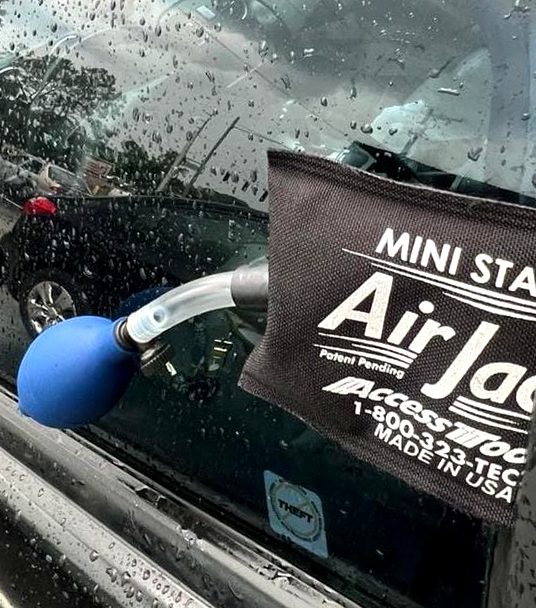
A car lockout is opened by working the door, not the lock, and nothing gets broken. The tech opens a small gap, reaches the unlock button or the handle, and the door is open. A running car, or someone inside, puts the call at the front of the line with the dispatcher on the phone until the van arrives, and the van is already on the island.
The air wedge and the reach tool
The tech starts at the top corner of the door with a slim plastic wedge, then pumps an air bladder behind it until there is just enough room for a long tool to reach the unlock button, the handle or the lock post. Let the air out and the door seals as if nothing happened. On cars built so that a reach tool is the wrong approach, he reads the door lock instead and cuts a key that opens it right there. No drilling, no scratched paint, no bent frame, and the whole thing is usually over in minutes.
Beach accesses, the park and the marina lots
Tell the dispatcher which access, which park lot or which dock. Keys locked in the car with the beach bag at Main Beach, with the cooler at Fort Clinch, or with the fishing gear at the marina are the island's everyday lockouts, and the tech is minutes from all of them. Sand in the door lock is cleaned out while he is there.
Rental cars
A visitor locked out of a rental car has no registration and a flight tomorrow. The rental agreement and your ID authorize the opening, and if the key is gone, a call to the rental company authorizes a replacement cut and programmed at the lot. Say it is a rental and the dispatcher knows the drill.
Trunks, kids, pets, engines running
A key shut in the trunk is reached by opening the door and popping the release, or by cutting a key where the release has been disabled. A child or a dog in a car in the heat is treated as an emergency, full stop: the closest van turns around and the dispatcher stays on the line. A car that locked itself while idling at the boat ramp is opened like any other, and the tech stays until you have checked it over.
Golf carts, RVs and boats
A golf cart locked in a Plantation garage, an RV at the park with the keys inside, a boat cabin at the marina: all opened the same way with tools sized for the door. RV entry and compartment locks are picked or bypassed, and the common RV and golf cart keys are on the van, so a lost one is often replaced on the spot.
Proof the car is yours
Before the door opens, the tech needs your ID and something that connects you to the car: the registration, the title, the insurance card, or the rental agreement for a hire car. Those papers are almost always inside the locked car, and that is fine; he opens it and reads them then. For a company vehicle, one call to the office settles it.
Where and when
Fletcher Avenue and the beach accesses, Centre Street and the downtown lots, Sadler Road, Fort Clinch and Main Beach, American Beach and the Plantation, the marina, the port, the airport lot and Yulee over the bridge. Same tools and same itemized quote at midnight; only the after-hours item changes, and you hear it first.
Car key replacement on Amelia Island
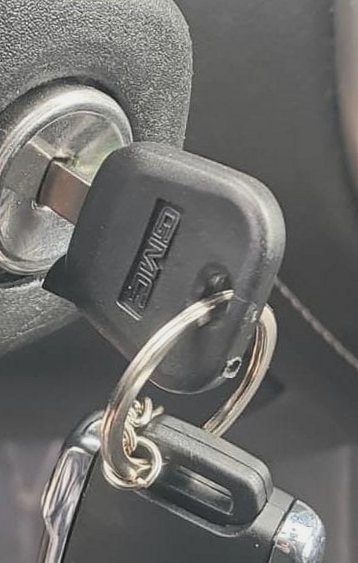
Keys lost on the island used to mean a tow over the bridge to a dealer and a day of the trip gone. Now the tech makes the key where the car sits: ownership check, key code, cut, program, drive. The sand and the sea take keys here every week, and this is the job that gets them back.
From no key to a working key
The manufacturer keeps a key code on file for every car, tied to the VIN. Once the tech has seen your ID and the registration, the title or the rental company's authorization, he pulls that code and cuts a key to it on the code machine in the van, which gives you cuts that match the lock rather than a copy of someone's worn key. A programming tool then plugs into the diagnostic port under the dash, the car is put into learn mode, and the chip in the new key is written into the immobilizer. The car starts. If you ask, every other key the car once knew is erased in the same session. On some older models the key is read off the door lock instead of a code. Either way nothing is taken off the car.
Three kinds of key
Cars take one of three keys. The plain transponder key is metal with a chip hidden in the head; without the chip answering, the car will not start. The remote head key is the same thing with lock, unlock and trunk buttons built in. The smart key for push-to-start cars has no blade in daily use; it talks to the car by radio and keeps an emergency blade inside the fob for the door. Which one you get is decided by the car, and the van carries blanks and fobs for all three.
Push-to-start
For a push-to-start car the smart key is written in through the port, and where the car allows it the lost key is erased in the same step. The tech also cuts the hidden emergency blade in the new fob, so the door still opens the day the fob's battery dies on the beach. When a car suddenly stops seeing a smart key it used to accept, the order of suspects is the fob battery, the car battery, then the car's memory.
Keys that went into the water
A key that went into the ocean is gone, and the one that went into the sound is gone too. The replacement is made at the beach access or the dock, and the lost key is erased from the car during programming, so a key that washes up next week is a souvenir, not a risk.
Makes and models
Domestic and Asian makes are the daily work, from old pickups and Jeeps on the beach to recent push-to-start SUVs: Ford, Chevrolet, GMC, Ram, Dodge, Jeep, Chrysler, Toyota, Honda, Nissan, Hyundai, Kia, Mazda and Subaru. Some European makes and some of the newest models need dealer-only tools, and the dispatcher says so on the phone instead of sending a van that cannot finish. Make, model and year gets you a yes or a no.
Trucks, fleets and the yards
Work trucks at the port and the mills, landscaping crews, the resort's maintenance vans: keys and remotes cut and programmed at the yard, several in a visit, and several trucks on one key where the make allows it. Called in early, the crew rolls before the first job.
Used cars and the second car on the island
A used car with one key is one drop away from the full lost-key job. A second car that lives in a condo garage half the year often comes back to a flat battery and a fob the car has forgotten; the tech brings a jump pack and re-programs it. A second key on delivery day costs less than a key made at the beach at night.
What to have ready
Your ID; the registration, the title or the rental agreement; and the make, model and year. If the paperwork is inside the car, the door is opened first and the paperwork read second. A company vehicle needs a call or a letter from the business in place of a registration.
Erasing the old keys
While the programming tool is connected, the tech can wipe the car's memory of every key it has ever known and write back only the keys you are holding. If your key was lost rather than broken, ask for exactly that. It adds nothing to the bill during a programming session, and it means a key that turns up in the dunes next month opens nothing.
What a replacement key costs, item by item
The trip charge; the labor to cut and program; the parts, which is the blank or the fob; and the after-hours charge when it applies. The part is the item that swings, because a bare transponder key, a remote head key and a smart key are very different pieces of hardware. Give the make, model and year on the phone and the quote already names the right one.
Car key duplication on Amelia Island
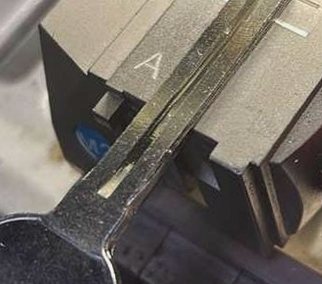
One working key in hand makes copying it the cheapest car key you will buy, and on an island where keys go into the sand, the spare is the whole plan. The tech cuts the copy, programs its chip if it has one, and tests it in the door and the ignition before handing it over. Fobs and remotes copy the same way.
Cut to code, not traced
There are two ways to copy a key. Tracing your key on a machine reproduces its cuts, worn edges included. Reading the cuts and cutting a fresh blank to the factory code gives you the key the lock was designed around. The tech cuts to code whenever the key allows it, then tries the new key in the door and the ignition before handing it over, so a stiff turn shows up at the curb and not a month later.
The chip
Nearly every car key made since the late nineties has a transponder chip in the head, and a copy with perfect cuts and a blank chip will open the door and turn the ignition and then refuse to start the car. So the tech programs the copy's chip through the diagnostic port, or clones it from your working key on the cars that allow cloning. Your original key is untouched either way.
The beach key
Island residents keep a plain spare in a surf pouch or a lockbox at the beach house and leave the fob at home. A plain key with a programmed chip starts the car and does not die in the water the way a fob does. The tech cuts and programs one for exactly this.
Plain keys on older trucks and golf carts
Older trucks and work vans take plain metal keys, cut in a minute, and golf carts take common blanks the van carries. The tech checks for a chip before cutting so you are not sold programming you do not need.
How many spares
Two keys suits most households, one on the ring and one in a drawer. Two drivers sharing one car want a key each and a third at home. Keys cut in the same visit share the trip charge, so the second and third cost only the blank and a few minutes of the tech's time.
Fobs, remotes and motorcycles
A second fob is written into the car next to the first, so both lock, unlock and start it. Remote head keys get the chip and the buttons programmed in one sitting. Motorcycle keys are copied from a working key or cut to code where the maker publishes one. The everyday fobs ride on the van; the rare ones are ordered and priced as the parts item in the quote.
Where a spare gets made
Wherever the car is: the driveway, the condo garage, the office lot, the marina. The van carries the machine and the tools, so a spare is a fifteen-minute stop rather than a trip anywhere.
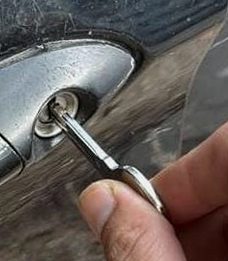
Ignition change and repair on Amelia Island
The ignition cylinder is a lock that turns thousands of times a year, and on the island it does it with salt in the air and sand on the key. It wears out faster here. The tech rebuilds or replaces it at the car and cuts keys to match, so you drive away without a shop visit.
What it feels like
A key that has to be jiggled. A key that turns hard on humid mornings. A key that will not turn at all even though the wheel is free. A key that turns but the car stays silent, or that only starts when it is pulled out a fraction. Every one of those points at the ignition cylinder, and the tech confirms it at the car before quoting, because a flat battery and a locked steering wheel can fake the first two.
Rebuild or replace
If the housing is sound and only the wafers are worn, the tech rebuilds the cylinder with new wafers cut to your existing key and nothing else about the car changes. If the housing has cracked or the cylinder has seized, he fits a new cylinder and either keys it to your existing key or cuts fresh keys for it. On cars where the ignition is tied into the immobilizer, the new cylinder is programmed in along with the keys.
Sand and salt in the cylinder
A key that carries sand into the ignition every day grinds the wafers, and salt air corrodes the housing. The tech cleans the cylinder, replaces the worn wafers and lubricates it with a dry lubricant that does not hold more sand. A key cut fresh to code instead of copied from the worn one finishes the job.
After a theft attempt
Someone's screwdriver leaves an ignition that will not accept a key and often a broken column cover with it. The tech replaces the cylinder, keys it to your key or cuts new ones, and tells you straight when the damage runs past the lock into something a body shop has to fix. In most cases the car drives away the same visit.
Broken keys
A key that snapped off in the ignition comes out with an extractor, usually without pulling the cylinder. The replacement is cut to code rather than copied from the two halves, because a key that broke was already worn thin.
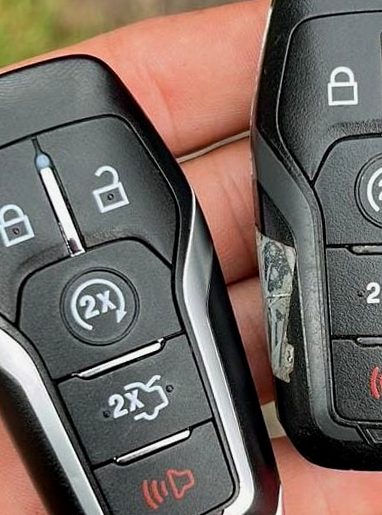
Key fob programming on Amelia Island
A fob that has quit needs one of three things, and the tech tests which before selling you anything. New fobs, replacements, and fobs the car has forgotten after a season in a condo garage are programmed at the car, and a lost fob is deleted so whoever finds it on the beach cannot use it.
Battery, memory, or the fob itself
Fobs fail for three reasons, and the tech tests them in order of cost. First the coin cell, which lasts a few years and tends to give up in the same week as the second fob's. Then the car's memory, which can drop a fob after a jump start or a battery swap, a common story for cars that spent the summer in a condo garage. Last the fob itself: a cracked board, worn buttons, or a trip through the surf in a pocket.
Fobs that went swimming
A fob that went into the surf or the pool sometimes dries out and sometimes does not. The tech tests it dry; if the board is gone, the car is programmed to a new fob and the dead one deleted. A plain spare key with a chip, kept in a dry pouch, is the island fix so a swim never costs a tow.
Programming a new one
The programming tool connects at the diagnostic port, the car is switched into learn mode, and the new fob is written in. Many cars insist that every fob they are supposed to know is present for the session, so bring the ones you still have. A remote head key gets its blade cut and its chip and buttons programmed in the same sitting, and once the tool is talking to the car the whole thing takes minutes.
Deleting the lost one
In the same session the tech can clear the car's list of fobs and write back only the ones in your hand. After that the lost fob will not unlock or start the car, whoever digs it out of the dunes. It costs nothing extra while the tool is connected, and most people never think to ask.
Smart keys
Push-to-start cars run on a smart key that speaks to the car by radio, and it is programmed through the same port. A lost smart key is replaced and the old one erased, and the emergency blade hidden in the new fob is cut so the door still opens if the fob's battery dies at the beach.
Shells and buttons
When the buttons need a hard thumb but the fob still works, the problem is the shell, not the programming. The board moves into a new shell, the blade is transferred or a new one cut, and the car keeps the programming it already knows. It is a fraction of the cost of a new fob.
Rentals, fleets and resort vans
Hire cars get a replacement fob on the rental company's say-so, at the lot, with the agreement in place of a registration. The resort's maintenance vans, the landscapers' pickups and the yard trucks at the port get fobs and remote head keys at the yard, several in one stop, with the fleet's paperwork standing in for individual registrations.
Household cars with one fob between them
One fob shared by two drivers is how a beach day starts with a 7 a.m. call. Add a second fob while the tech is already at the car and it costs the part plus a few minutes; from then on, when one fob disappears into the sand, the other still works and the lost one is erased.
What to tell the dispatcher
Make, model and year, how many fobs you have and how many you want, and where the car is. The quote then includes the fob as the parts item, and the tech meets you wherever the car is parked on the island.
Where we work
Car calls come from the beach accesses, the park, the marina, the downtown lots, the resorts and the yards across Amelia Island and Yulee, 24 hours a day.
- Fernandina Beach 32034
- South end: American Beach and the Plantation
- Summer Beach
- Fort Clinch and Main Beach
- Yulee
Locked out on Amelia Island? Call now.
(904) 621-648024/7, licensed and insured, and an itemized quote on the phone before the van moves.