Residential Locksmith on Amelia Island, FL
Residential locksmith service for Amelia Island, from the van based at 382 S Fletcher Ave in Fernandina Beach: house and condo lockouts, rekeys on closing day and at every rental turnover, lock changes after an eviction, repairs on hardware the salt air has had its way with, and fresh installation of new locks where a door has no hole yet. The historic district, the beachfront, the gated communities at the south end and Yulee across the bridge, 24 hours a day. Call (904) 621-6480 and a licensed and insured tech is on the way with a fast arrival time.
Every home job is quoted item by item before the van moves: the trip charge, the labor, any parts you keep, and the after-hours charge if the hour calls for one. That is the invoice. Lockouts, and anyone locked out with a child, a pet or a stove on, are dispatched while you are still on the phone. Rekeys, keypads, repairs and new locks are booked around checkouts, closings and your own hours.
The van carries what island houses need: pinning kits, followers and a code machine; Schlage, Kwikset and Baldwin hardware in stainless and marine finishes; keypad and smart locks and lockboxes; mortise springs and cylinders for the old houses downtown; and the bits and jigs for a fresh installation. Below is what each residential service involves and what to have ready. We are the #1 locksmith on Amelia Island because the quote holds, the arrival is fast, and a lock is picked, never drilled, whenever it allows.
Questions Amelia Island homeowners and hosts ask us
What does it cost to get back into a house or a condo on Amelia Island?
An itemized quote on the phone: the trip charge, the labor to open the door, parts only if a lock has failed and needs replacing, and an after-hours charge at night or on a weekend. A plain lockout has no parts. You hear every item before the van leaves 382 S Fletcher Ave. Call (904) 621-6480.
We just bought a beach house that was a rental. What should we do first?
Rekey every exterior door to one new key, reset every keypad code, and swap any lockbox. A rental house arrives with keys and codes held by guests, cleaners, the manager and the previous owner. It takes about an hour, and if the locks are pitted by salt, the tech says which to replace with marine-rated hardware.
Can you set up a keypad so each guest gets their own code?
Yes. A keypad deadbolt with a rekeyable backup cylinder, the manager's master code set at install, and a code per guest that you add and delete from the phone. The tech shows you the whole routine before leaving, and the backup cylinder is keyed to the house key.
How fast can you reach the south end, the Plantation or American Beach?
The van is on the island, so Fort Clinch and Nassau Sound are both short runs from Fletcher Avenue. Give the dispatcher the gate or the street and you get a real arrival time, not a slogan.
Will picking the lock damage it?
No. Picking lifts the pins the way the key does and leaves the lock working with the same key. Drilling is only for a lock that has failed inside, which salt air does cause here, and then you hear about it first and the replacement comes off the van.
Do you work on the old locks in the historic district?
Yes, and we would rather restore them than replace them. Mortise sets, rim locks and skeleton-key interior locks are cleaned, re-sprung and rekeyed, with a modern cylinder fitted where the house needs a key that cannot be bought at an antique shop.
Before you book any locksmith on Amelia Island, here is how an honest quote is put together and what to check when the van pulls up.
What a real quote looks like, item by item
A locksmith price has four parts whether anyone names them or not. The trip charge gets the van to you. The labor is the work at the door or the car: picking, rekeying, cutting, programming. The parts are what you keep, a deadbolt, a core, a key blank, a fob. The after-hours charge covers nights, weekends and holidays, and on a weekday afternoon it is nothing.
Ask for each one by name before the van leaves. At (904) 621-6480 the dispatcher reads them out and the tech repeats them at the door, and the invoice adds up to the same total. A single low number with "it depends" attached is not a quote; it is the opening of a negotiation you did not agree to, and it tends to go one way once a van is parked in your driveway.
What to tell the dispatcher so the price is right the first time
Six facts price a job exactly. What is locked: a car, a house, a condo, a rental, a storefront, a safe, a boat. Where it is, by street or at least by end of the island, since Fort Clinch and the Plantation are different drives. What kind of lock or car it is: a knob, a deadbolt, a keypad, a storefront mortise, or the make, model and year.
Whether you have any working key. What you want when it is done: just in, or in and rekeyed, or a new lock. And when: now, or booked for the morning after checkout. With those six the quote is the invoice. Without them it is a guess, and a guess on the phone is always made low.
Licensed and insured on an island: what it means and how you check
Licensed means the business is registered to operate, with a name, an address on the island and someone accountable. Insured means a gouged door, a cracked lock body or a scratched car is covered by the company's policy and not argued about on the porch. On an island where half the doors belong to rentals and condos, the owner is often not standing there, and the insurance is what protects both of you.
Check all three in a minute: the company name, matched on the van and the invoice; where the company works from, ours being 382 S Fletcher Ave; and a plain yes to whether damage is covered. Amelia Island Locksmiths is licensed and insured, and every tech gives you the company name before the toolbox opens.
Why we confirm it is your door, your car or your rental
Nothing opens until the tech knows you are allowed through it. For a house that is a photo ID with the address, or a deed, a lease or a utility bill. For a car, the registration, the title or the insurance card. For a vacation rental, the booking confirmation plus the host or manager on the phone. For a business, the owner or a manager or key holder named on the lease. For a boat, the registration.
The ID is often inside the thing that is locked. The door opens, then the ID comes out. The whole check takes a minute, and it is the reason nobody can call a locksmith and walk into your beach house while you are at dinner on Centre Street.
What happens between the van door and the invoice
The tech gives you the company name, looks at the lock before touching it, and repeats the itemized quote. If the door carries something the dispatcher did not know about, a second deadbolt, a high-security cylinder, a lock someone already tried to force, the numbers change and he waits for your yes.
Then the work: picks on a house lock, an air wedge and a reach tool on a car, a follower and fresh pins on a rekey, a code reset on a rental keypad. He tests it with you watching, hands over the keys or the new code, and writes an invoice carrying the company name and the quoted total. You pay once the door is open and the job is done.
The cheap phone price that grows at the door, and how to see it coming
Tourist towns see the pattern more than most. A very low price on the phone, no company name given. An unmarked car arrives. The tech glances at an ordinary lock and says it must be drilled, which turns a service call into a new lock and an hour of labor. The real price appears after the door is open, several times the phone number, cash preferred.
Three tells, visible while it happens: no company name on the call, a drill before any attempt to pick, and a price that moves after the work. The answer to all three is the same: an itemized quote before the van moves, picking first with any drilling explained ahead of time, and an invoice that matches the call.
Home locks rekey on Amelia Island
Rekeying keeps the locks on the doors and retires every key that existed before. On an island where houses are rentals half the year and change hands the other half, it is the most common job we do, and the one that does the most for the least.
The mechanics
The tech pulls the cylinder from the knob or deadbolt, pushes a follower through to hold the springs, swaps the bottom pins to a new combination and cuts the new keys on the machine in the van. Each door is tested with the new key and the old one, so you watch the old key fail. Three doors take about an hour. Kwikset SmartKey cylinders reset with a tool in seconds instead of being re-pinned.
Rental turnovers
A rental key goes home in a guest's beach bag at least once a season. Managers and hosts along Fletcher Avenue and in the condos book a rekey when it does, every exterior door in one visit, keys labeled for the office. Most of them end the cycle with a keypad deadbolt that carries a rekeyable backup cylinder: codes turn over with the guests, and the cylinder is rekeyed only when a physical backup key is lost.
Closing day
A house bought on the island comes with keys held by the previous owner, the agent, the inspector, the cleaners and, if it was a rental, every guest who ever copied one. Rekey the day you close. Every exterior door goes on one new key, keypad codes become yours, lockboxes come off or get new codes, and spares are cut in the driveway.
One key for the whole property
Keyed alike puts the front door, the deck door, the ground-level storage, the outdoor shower and the golf cart garage on one key. It works across locks that share a keyway, Schlage with Schlage, Kwikset with Kwikset; a mismatched cylinder gets swapped. Padlocks on the gate and the beach gear shed are matched too, in marine-rated versions that do not seize by August.
Condos and shared keys
A condo door is rekeyed like a house door, and where the building runs on a master key the tech pins the new cylinder so the association's master still opens it. Common doors, pool gates and bike rooms go on a restricted keyway when the association is tired of residents copying the building key at the hardware store.
Who holds a key after a rekey
The rekey is a good moment to decide who gets a key at all. The cleaner and the pool service can have a code with hours instead of a key; the neighbor who waters the plants gets a key that opens the house but not the owner's closet; the manager gets one labeled set. The tech cuts what you decide and nothing more, and the count goes on the invoice.
The historic district
Old mortise locks around Centre Street rekey too, with a new cylinder fitted where the original has no cylinder to pin. The brass stays, the mechanism is cleaned and re-sprung, and the house gets a key that cannot be bought at an antique shop.
Second homes with the owner elsewhere
Many island houses belong to someone who is not here. The tech works on the caretaker's or manager's authorization, photographs the finished locks, emails the invoice, and leaves the keys with whoever the owner names. A keypad with a code the owner changes from a phone in another state usually ends the need for a rekey at all.
New construction south of town
New houses along A1A and in the newer subdivisions arrive on a construction key the trades all carried. Some brands let the owner's key knock it out; many do not, and the trades keep their copies. A rekey on move-in day settles it, SmartKey cylinders reset, the rest re-pinned, every door on the one key you carry.
What a rekey costs, item by item
The trip charge, labor per cylinder, the keys you take away and any pins or cylinders replaced for wear as parts, and an after-hours charge only outside normal hours. Count the doors and the keys you want and the quote is exact before the van leaves Fletcher Avenue.
House and condo lockout on Amelia Island
A lockout on the island ends with the door open and the lock untouched, whether it is a stilt house on the beach, a condo on the fourth floor, a Victorian downtown or a rental at midnight with the host two states away. The tech picks or bypasses the lock, confirms you belong there, and if the key is lost rather than inside, rekeys on the spot.
How a house lock is opened
Residential locks are pin tumblers. The tech puts light turning pressure on the cylinder with a tension tool and lifts each pin to the shear line with a pick until the plug turns, exactly as the key would. Knobs take a minute or two, deadbolts a little longer, levers about the same as knobs. High-security cylinders take more time and the tech says so when he sees one. Some locks are bypassed instead: a latch slipped, a knob shimmed, a deck slider opened through its latch. Nothing is pried and nothing is marked.
Rental lockouts after dark
The most common island lockout is a guest at a rental: the code did not work, the keypad died, the lockbox jammed. The host or the manager authorizes by phone, the guest shows ID and the booking, and the tech opens the keypad through its backup cylinder or resets it, replaces the batteries and leaves a working code. Hosts with many doors keep our number for exactly this hour.
Keypads and smart locks that will not open
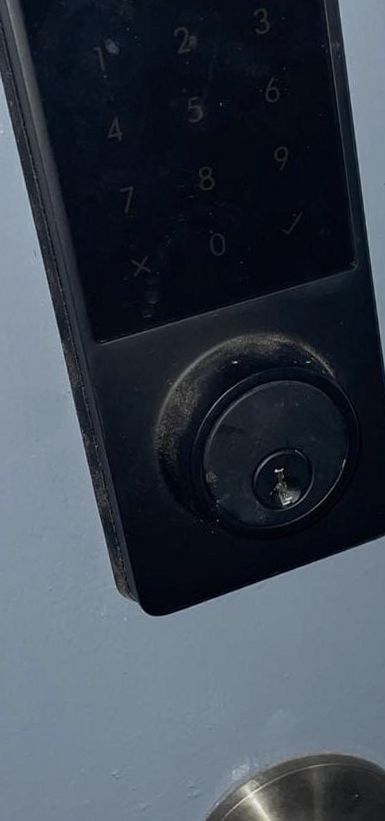
Dead batteries, forgotten codes and salt-stiffened motors are the causes. The tech opens through the backup cylinder, powers the lock from a 9-volt battery on models that allow it, or bypasses a failed unit, then replaces batteries, resets codes with you and checks the bolt runs clean.
Keys inside, keys snapped, keys in the sea
Keys on the counter: the door is picked and you are in. A key snapped in a salt-pitted lock: pulled with an extractor, the cylinder cleaned so it does not happen to the next key, a fresh key cut to code. A key in the Atlantic: the door is opened and rekeyed in the same visit, since the key is not coming back.
Condos, elevators and lobbies
Condo unit doors are picked like house doors, with the building's management confirming when the office is closed. Lobby and elevator keys are the association's, and a resident locked out of the building is let in on the manager's word.
Gates and long driveways
Give the dispatcher the gate for the Plantation, Summer Beach or the gated streets off A1A, and tell the gate a locksmith is coming. For a beach house down a sand road, a landmark helps more than a house number at night.
Stilt houses, storage rooms and golf cart garages
Locked out of the ground-level storage with the beach chairs, or the golf cart garage with the cart, is an island evening call. Those doors are picked like any other, and a seized padlock on the gear shed is cut and replaced with a marine-rated one keyed to the house.
Locked out with the stove on, or a child inside
Say so, and the call goes to the front of the line with a real arrival time for your street. The tech opens the door first and does the paperwork after.
Proof you belong there
A photo ID with the address, a deed, a lease or a utility bill for a house; the booking plus the host for a rental; the manager for a condo. If the ID is inside, the door opens first. A minute, and it is why nobody can call a locksmith and walk into your house.
Yulee and over the bridge
Lockouts in Yulee are handled from the same van with the same quote; the bridge adds a few minutes to the drive and nothing to the price.
After the door opens
Lost key, not left key: ask for the rekey while the tech is there with the cylinder in his hand. Spares and a keypad with your own code are the same visit.
Eviction lock changes on Amelia Island
When a tenancy ends in court, the locks are the last step and the court sets the timing. Once the sheriff has served the writ of possession, the property is the landlord's again and the locks change that day. Landlords and property managers on the island and in Yulee book us for that date so the unit is secured in one visit.
The Florida sequence
Changing the locks on a tenant before the court process is finished is an illegal lockout under Florida law, and the tenant can recover damages. The order is judgment, writ, the sheriff posting it, the waiting period, the sheriff removing the tenant, and then us. The dispatcher asks which step you are on and books the job for the day the writ is executed.
What the tech does on the day
Meets you or the manager at the property at the time the sheriff gave. Opens any lock the tenant changed. Rekeys or replaces every exterior door, the garage entry, the storage room and the deck slider. Wipes every keypad code and resets it. Swaps padlocks on gates and sheds. Hands over one labeled set of keys and an invoice that lists the address, the date and the doors done, for the file next to the writ.
Rentals that were vacation rentals first
Many long-term rentals on the island were short-term rentals before, which means a keypad with a long history of codes and a lockbox or two. The tech clears the keypad entirely, removes or recodes the lockboxes and puts the house on a fresh key, so nothing from either tenancy still opens the door.
Rekey, replace or go to codes
Rekey by default. Replace when the tenant damaged the locks or the salt has pitted them through. Move the front and back doors to keypads when you would rather the next turnover be a code change than a locksmith visit. The tech quotes each and you choose.
Abandoned units and surrendered keys
If the tenant has moved out and surrendered the keys in writing, or the lease has ended and the unit is empty, the lock change is a normal turnover and can be done the day you call. A tenant who simply vanished is abandonment, which Florida handles with its own notice rules; your attorney says when you may retake the unit, and the locks change after that.
What to bring
The executed writ or the sheriff's notice, your ID as the owner or the manager, and a count of the exterior doors and keypads so the quote covers all of them.
Managers with several units
Managers running many units on the island get the same tech when the schedule allows, keys labeled by unit, a single invoice per property, and ordinary turnovers booked through the same number as evictions.
Lock repair on Amelia Island
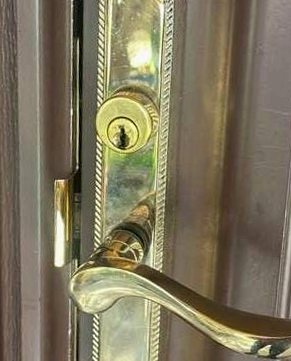
Salt air is the island's lock repair business. Cylinders pit, springs rust, strikes drift as wood doors swell and shrink with the humidity, and hardware that would last twenty years inland is tired in five a block from the beach. Most of it is repaired with a part and a cleaning; the rest is replaced with hardware that can take it.
Doors that will not latch
A swollen door and loosened hinges leave the latch missing the strike and the deadbolt stopping halfway. The tech adjusts or moves the strike, tightens or shims the hinges and sets the bolt to throw fully. An hour, no new hardware.
Keys that stick, turn hard, or spin
Salt and sand in a cylinder make a key catch and wiggle. The tech cleans the cylinder, replaces worn pins and lubricates it with a dry lubricant that does not hold more sand. A key that turns without moving anything means a broken spring or a stripped tailpiece inside, replaced as a part.
Corroded hardware
When a lock body is pitted through or a deadbolt has seized, repair is over. The replacement is stainless or marine-rated, keyed to the house key, and the strike and screws are stainless too, because a good lock on rusting screws is a rusting lock. Beachfront owners who switch once do not switch back.
Mortise locks and old brass
The houses around Centre Street and the blocks south of it have mortise sets and rim locks that are worth saving. The tech removes the lock, cleans and re-springs it, fits a new cylinder where a key is needed, and puts it back in the same pocket, so the door and the brass are untouched. When one is truly finished, the replacement is fitted to the old pocket rather than a new one.
Keypads that misbehave
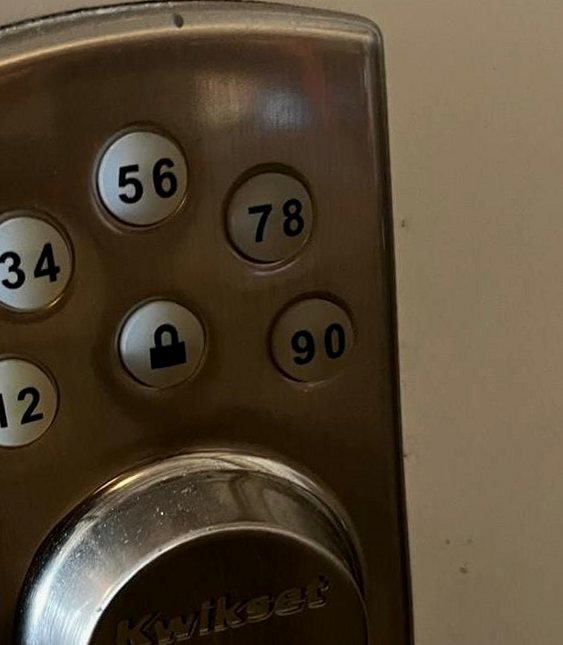
A keypad that accepts the code but will not throw the bolt has a bolt rubbing the strike or a tired motor; one that ignores the code has dead batteries or has reset to factory. The tech checks in that order, and most keypads are back in service without a new lock.
Screen doors, deck gates and outdoor showers
Storm and screen door latches, deck gate locks and outdoor shower door hardware all live in spray. They are repaired or swapped for marine-rated versions on the same call as the main door.
Garage doors and gates
Garage side doors, gate latches and the lock on the walkway to the beach all take the same salt and sand. They are repaired or swapped for marine-rated hardware on the same call.
How the tech decides
A sound lock body plus a worn part, a bad fit or dirt is a repair. A pitted body, a seized cylinder or parts nobody makes is a replacement keyed to your key. You hear which before any tool comes out, with the items for each.
Fresh installation: a new lock where there is no hole
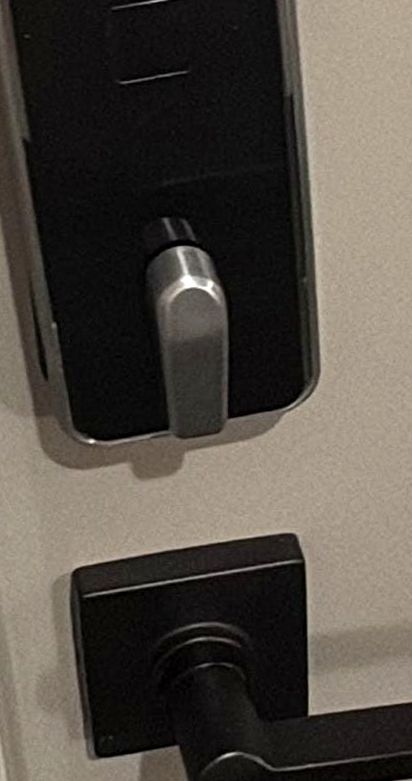
A fresh installation is a lock going into a door that has no hole for it. On the island that is a deadbolt above a lone knob on a beach house, a lock on the storage room under a stilt house, a bolt on the French doors to the porch, a keyed lever on the owner's closet in a rental, or hardware on a brand-new door in a brand-new house south of town.
Preparing the door
The tech marks the height and the backset, bores the cross bore with a hole saw and the edge with a spade bit, mortises the latch face flush with a chisel, cuts the strike pocket in the frame and drives long screws into the stud behind the jamb. The lock goes in, the bolt is run through its full throw, and the door is cycled until the fit is right. Shavings are cleaned up before he leaves.
The owner's closet in a rental
Every rental needs one room the guests cannot open. A keyed lever or deadbolt on a closet or a storage room, keyed separately from the house, is a half-hour installation on a hollow-core door, with one key for the owner and one for the manager.
Deadbolts above knobs
A locking knob on its own gives way to a hard shoulder; a deadbolt with a full one-inch throw into a reinforced strike does not. The tech bores a new hole roughly six inches above the knob, keeps the same backset so the two locks line up, and keys the deadbolt to the knob's key so nothing is added to the ring. On a standard door it is under an hour.
Hardware that lasts here
For a door that faces the ocean, the tech fits stainless or marine-rated hardware with stainless screws and strike, and a dry lubricant at install. A keypad for a rental, a plain deadbolt for security, a lever for convenience; the van carries the common finishes or fits the lock you bought for the same labor.
Doors we prep
Wood, fiberglass and steel entry doors, French doors, storage and golf cart garage doors, outdoor shower doors, and interior doors that need a keyed lock. Fiberglass is bored carefully so the skin does not crack; steel gets the right bits and reinforcement. Sliders to the deck get a surface bolt or a pin lock.
Lockboxes and key safes
A wall-mounted key safe for a rental or a cleaner is a fresh installation too: anchored into the stud or the block, set with a code the manager controls, and placed where the salt spray does not reach it. The tech installs it, sets the code with you and shows the reset.
What to have ready
The door material, whether it has any lock already, and what you want fitted. With those three the quote is exact and the hardware is on the van before it leaves.
Where we work
Residential calls run the length of the island, from Fort Clinch to Nassau Sound, plus Yulee across the bridge, from 382 S Fletcher Ave, day or night.
- Fernandina Beach 32034
- South end: American Beach and the Plantation
- Summer Beach
- Fort Clinch and Main Beach
- Yulee
Locked out on Amelia Island? Call now.
(904) 621-648024/7, licensed and insured, and an itemized quote on the phone before the van moves.